
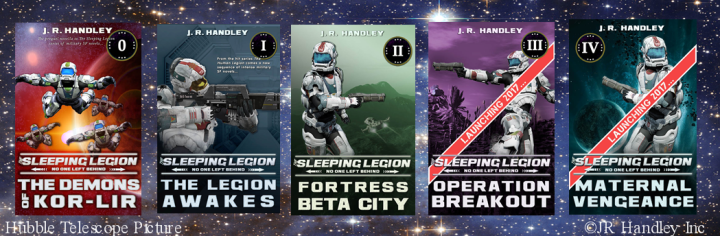
 Hey Space Cadets, how’s everyone doing today? I’m doing fantastic! I’ve sent my finished reviews to the Boss Man for final approval. Once he signs off on it, I’ll give it back to my editor. So… I’m onto editing my short story for TEU3! And don’t forget to read the Sleeping Legion before the fourth and final novel releases in the near future. There are audiobooks available for you, if that’s your preference. If you’ve already read up through Operation Breakout (Sleeping Legion Book 3), then check out my short story in the Four Horsemen Universe Anthology, For a Few Credits More. Continue reading “SciFy Shenanigans: Justin Sloan”
Category: Sci-Fi Shenanigans
Beyond the Shenanigans: Felix R Savage
 Hey, Space Cadets, how are you doing this fine day? I’m doing great, had an awesome walk and trying to get back into the routine of healthy living. Hopefully, life cooperates so I can continue my exercise routine, but ultimately family first. I’m at chapter 80 of 88 with book four, which doesn’t yet
  have a name. I intentionally keep my wife and kids in the backdrop, since they deserve their privacy and anonymity. However, if you’ve read this blog you’ll know that my wife is recovering from a car accident and my son is having a tough go of it. I know this book should’ve been finished two months ago, but I trust you’ll forgive my tardiness. Continue reading “Beyond the Shenanigans: Felix R Savage”
SciFy Shenanigans: Matthew Williams
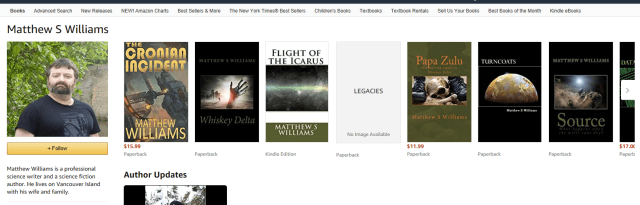
Hey Space Cadets, how’s everyone doing today? I’m doing amazing, just drinking coffee and working on my updates to book 4. Since not much else is going on – let’s get right to the point of my latest blog posting! Yes, I still love doing author interviews! I’m continually looking for more subjects for the Warrior Weekend Series, and the ‘SciFy Shenanigans’ series. In this interview series, I specifically to talk with other authors of science fiction! Here goes nothing!
SciFy Shenanigans: Nick Cole

Hey Space Cadets, how’s everyone doing today? I’m doing amazing, taking a bit of time to spend with my family. I’m also working on a couple of short stories, while I wait for my edits to come back. If you haven’t read my previous post, my fourth book is finished and sent to the editor. Hope they aren’t too busy with their red pen! For those who haven’t already read my series, feel free to read The Sleeping Legion Series so you will be ready for the fourth book! Then I will be working on my next super-secret project. I can’t wait to tell you about it. Now on to today’s blog – our SciFy Shenanigans Interview with Nick Cole.
Let’s get right to the point of my latest blog posting, interviewing Nick Cole! Yes, I’ve gotten bit  by the interview bug! I’ve started the Warrior Weekend Series, the Family Friday Series, and now the ‘SciFy Shenanigans’ series that only serves to talk with other authors of science fiction! Here goes nothing!
SciFy Shenanigans: Craig Martelle

Hey Space Cadets, how’s everyone doing today? Things are going well here, life is crazy hectic and I’m not where I want to be with book four but that’s the writing life. I let myself get intimidated by the blank page, but I’ve gotten back on the wagon and here we are! Now, let’s get right to the point of my latest blog posting! Yes, I’ve gotten bit by the interview bug, so here is another installment of SciFy Shenanigans! Now grab your popcorn and enjoy the ride!
Ladies and Gentlemen, Boys and Girls, Children of All Ages……Craig Martelle
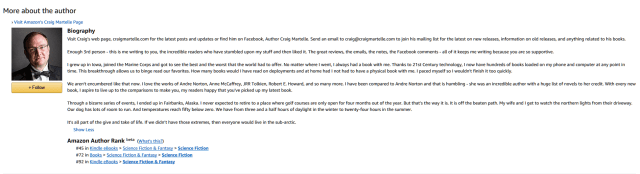
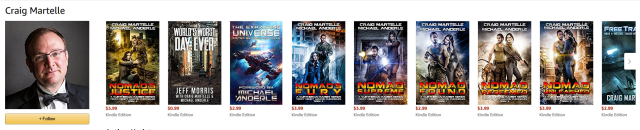
How’re you doing today Craig?
I’m doing amazing…launched two books over the last two weeks and they’ll have all new covers with actual models that we hired for a custom photoshoot. It’s all very exciting to put out books 4 and 5 of the series, then put the new covers on books 1 through 3.
Wow, that is awesome! I wanna be you when I grow up! Why don’t you tell us a little bit about yourself and your background?
I’m a young retired dude. I retired from the U.S. Marine Corps after nearly twenty-one years of service at the ripe old age of 39. Then I decided that I needed to do something with myself, so I went to law school. I graduated summa cum laude and was immediately hired upon graduation as a business consultant. I did that for a while, and although it was lucrative, it required a great deal of travel. So I retired a second time. I need to stay busy, so I started writing, then I trashed the whole thing as it was a total crybaby oh-woe-is-me sobfest. Then I started with my first book about survival in the Alaskan winter. I wrote that book in 61 days, 100,000 words. I took two months doofing around editing it. After twenty reads, I had to say good enough (although it wasn’t). I then started writing my science fiction and had great fun with it, so that’s where I am.
I’ll go out on a limb and assume that if you write books you also enjoy reading them. What other genres do you enjoy reading, and how have they affected your writing?
Science Fiction and thrillers, maybe a good action/adventure yarn.
Who are your biggest writing influences?
Andre Norton, Robert Heinlein, Anne McCaffrey.
Who are your favorite authors and books?
Soooo many; Jules Verne, Edgar Rice Burroughs, JRR Tolkien, JK Rowling, Robert E. Howard, Andre Norton, Mercedes Lackey, and David Weber!
What is your preferred writing style?
3rd person omni
How did that lead you deep into the weeds of the writing life?
I love the stories and so many were untold. I’m a lifelong daydreamer. I thought that I told myself good stories, so then I started writing them down.
When did you get serious about your writing?
When I retired from the consulting business in September 2015. I was still way too young to sit at home and do nothing. So I sit at home and write instead.
What is your current novel? Tell us a little bit about the premise?
I just wrote The End on my 21st book. This series is co-written with Michael Anderle and based in his Kurtherian Gambit universe. The premise is that the world is left in ruins and a former Marine, enhanced by alien technology who had been in hiding for twenty years because he wasn’t there to protect his family, returns and decides it’s time to bring humanity back to civilization.
The Terry Henry Walton Chronicles is exclusive to Amazon – the link to the series page is here.
Wowzer, 21 novels? I feel like I should kneel down and lay out some “we aren’t worthy” lines from. Where did you find the inspiration for Nomads Fury?
Since this was a spin-off series, the inspiration was Michael Anderle’s for the character but he gave me wide latitude in developing the story. I mean really wide. You have 150 years of time to fill. You start with this level of technology and you end with this. Go. I wrote a four-book series on survival and what it would take to rebuild a society (End Times Alaska – it is wide, so find it anywhere). I used much of that research to help me shape the rebuilding in the new series.
Your characters from Nomad Supreme are sent into a gladiatorial death match. Who wins?
Terry Henry Walton, former Marine, now enhanced with nanocytes and juiced with a little Werewolf. So the only fair fight he’s been in is the one that he lost, which hasn’t happened yet.
What do you listen to while you write? Or do you prefer silence?
Silence mostly, but other times, Rush, Rock, Metal, Gothic Rock, and New Wave.
What is the most embarrassing thing you’ve looked up in the name of research – or what do you think the government has maybe flagged you for?
In my one thriller, People Raged and the Sky Was on Fire, I had to do a great deal of research in how to make TATP, a homemade explosive used in IEDs around the world. It’s really volatile stuff, but can be made with readily available chemicals.
I try not to do embarrassing net searches….
What was your favorite part of writing Nomad Supreme & Nomad’s Fury?
The interplay between the two main characters is key. Both are genius level intelligence, but Terry Henry falls back into “real man” mode often and misses the subtle cues from his wife.
Which actor/actress would you like to see playing your main characters from The Terry Henry Walton Chronicles?
The Rock and a young Denise Crosby
Do you have a special time to write or how is your day structured?
I get up at 3am. I’m still conditioned from the Marine Corps. I doof around with marketing and social engagement, read the news, and then try to jam the first thousand words by 6am. On a great day, I will have 5k words by noon.
Do you aim for a set number of words/pages per day?
I shoot for 3500 good words every day (I edit as I go). Good days are 5k+.
When you develop your characters, do you already have an idea of who they are before you write or do you let them develop as you go?
I have a mostly complete idea but flesh them out as I go in case I need to tweak their personalities to fit a plot idea.
How did writing Nomad’s Fury differ from your writing your previous novels?
Since this was the fifth book in the series, we needed to keep the plot and the characters fresh. We ratcheted up the action and created more depth to a couple of the people from the previous books. We brought new life to the world.
If Nomad Supreme had a theme song what would it be?
Interesting question. I think it would have to be something by Metallica, maybe Of Wolf and Man.
Nomad’s Fury is full of many amazingly talented characters and I imagine it was really fun to create some of them, but which one was your favorite and why?
I like the hell out of the Werewolf called Ted. He has Aspergers so doesn’t necessarily understand the social graces. He is freakishly driven on what he considers important which may not be obvious to those around him. He’s such a good guy at heart, but wonders about the others and he considers them easily distracted.
What advice do you have for writers who are just starting out?
Write. If you want to play golf well, you practice, but you also play. Write, publish, learn, and do it again. Just writing is good, but not good enough. Write with intentionality. Find people who can give you honest feedback, put your ego aside, and learn to write better. Then you can work on your processes and those little things you need to know to be a successful small business (marketing, taxes, business org), which is what all Indie authors are.
I hope you enjoy this little conversation, and if you want to find out more about Craig Martelle then follow the rabbit trail to their warren in the internet! If they don’t like it, beat ‘em with a carrot and keep on truckin’!
Until next time, stay frosty and don’t forget to keep your powder dry!

JR
–> As usual, all images came from the Google’s “labeled for reuse” section or are screen shots taken by JR Handley and used under the Fair Use Doctrine.
–> Some of these interview questions were inspired by my good friend TeacherofYA, and are used with her permission. If you have kids who love to read, she’s the girl who’ll make the literary introductions! You should check her out, after a lifetime of reading, your kids will thank you.
SciFy Shenanigans: MK Clark
Hey Space Cadets, how’s everyone doing today? I’m doing amazing, going through the scheduled panels to pick my RavenCon schedule. I should have that posted this weekend, so if you’re there you can say hello! Now, let’s get right to the point of my latest blog posting! Yes, I’ve gotten bit by the interview bug! They’re still super fun, because I get to talk to a lot of interesting people. Would you believe I was once called “motor mouth” as a kid? I know, it’s hard to believe! Anyway, enough about me, here is another installment of the SciFy Shenanigans. I took out my weed whacker – and cut the weeds back enough that I found MK Clark! Grab your popcorn and enjoy the ride!
Ladies and Gentlemen, Boys and Girls, Children of All Ages……MK Clark
First, why don’t you tell us a little bit about yourself and your background?
Obviously, I love to write. What I love most about where I’m at right now is that I get to write all day at work and then come home and write some more.
I currently live and work in the “keep it weird” city of Austin, TX. I work downtown as a technical writer, so I get to see all different kinds of people coming in for the conferences and the cons and SXSW, etc. It can be a lot of fun and it provides a lot of inspiration, even though it makes public transportation crazy.
When I was younger, I wanted to be an astronaut or a fighter pilot. As I got older, I figured out that you had to be good at taking orders or science, and neither of those was really my specialty. So, I had to figure something else out. And although I started writing when I was 14, but up until my junior year of college, it was just a hobby, not something I really wanted to pursue. So, with a year and a half left to go, I switched majors and broke out into the world of writing.
What is something people would be surprised to know about you?
Before I switched majors, I was actually on the road to graduate with a degree in dance. My goal was to dance with the ballet corps in NY.
I’ll go out on a limb and assume that if you write books you also enjoy reading them. What other genres do you enjoy reading, and how have they affected your writing?
I really do enjoy reading. My husband and I have a whole library in our house. I really enjoy reading sci-fi and fantasy, although he is a fan of the dystopian and zombie apocalypse, but we both also really enjoy historical fiction as well.
So, I think a big one for me is that, I love science-fiction, but none of my friends did, because it was too “dry” for them, too technical. So when, I started to really think about writing and writing sci-fi, I had to look at the differences between sci-fi and fantasy and ask myself, why does my best-friend love this book, and not this one? And I’ve tried to use that to make my stories enjoyable to everyone, a way for someone to ease into the genre, without losing the wonder of sci-fi.
Who are your biggest writing influences?
Orson Scott Card has been a huge influence for me. I was captivated with his books and tried to get everyone I knew to read them. At the same time, I’ve been fascinated by Janet Evanovich’s Stephanie Plum series, I love how real she makes things, how chaotic and yet relatable in a “I’ve been there” kind of way. And she’s funny. I admire that. I want that for myself.
Who are your favorite authors and books?
Brian Jacques will always be a favorite of mine. His Redwall series was probably my most read growing up until I found Card. But in addition to that, I have quite an eclectic collection of favorite books from the Nine Princes of Amber and the Golden Compass, to Grapes of Wrath and Life of Pi, to Momo and Howls Moving Castle, as well as The Book Thief and All’s Quiet on the Western Front.
What is your preferred writing style?
I enjoy writing in third person, past tense. I’m not a huge fan of present tense. I don’t do it well, even though others have. When they do, I am both impressed and flummoxed by it at the same time.
How did that lead you deep into the weeds of the writing life?
To be honest, I hated writing as a kid. I distinctly remember being in the fifth grade and getting straight A’s in all my subjects except English. I only really started writing because my sister used to write, and my father would read her stories and encourage her, and I was jealous. So, really, I have jealously and my fiercely competitive nature to thank.
When did you get serious about your writing?
That’s a hard question to answer. As I’m not entirely sure myself. I’ve already said how it started, but we moved in the middle of all that, and I was mad, so I threw myself into writing as an escape. Somewhere in those high school years, I realized, I had a real story here, and if I could finish it, I could do something with it. The best I can say is high school, even though I never intended to go into a writing career until half-way through college.
What is your current novel? Tell us a little bit about the premise?
My current novel, is actually my first. It’s call Space Jumpers and it follows the life of Don O’Hara, son of a well-known General in a long-running war with an alien race. But it doesn’t just follow Don’s life, the novel starts out about two decades after Don’s story begins. This snapshot provides readers a glimpse of how Don is known, he’s not the hero, almost everyone hates him and wishes he’d left their lives well enough alone. After that, readers are transported back in time to the beginning of Don’s story and how he started this journey to being the most hated man alive.
At some point in high school we were studying WWII and I happened across the history of Alexander the Great at the same time. I just couldn’t get over the idea of how this guy, who probably was responsible for the death of more people than Hitler was known as “the great.” The idea of hindsight being 20/20 and winner’s writing the history books caught me and I knew I wanted to write a story that embodied this and it just so happened that Don’s story was the perfect one for it.
Space Jumpers is obviously a series, where can we expect it to go?
Space Jumpers is just the first part of Don’s story. The series is called The Young Soldier. In the next book Pursuing Dreams, which I’m currently editing and getting ready to publish, reader’s will continue to see snapshots of the future in parallel with “present” events that provide readers with all the answers on how it happened and why. In this way, it really is left up to the reader on whether Don was justified or not in his actions and how he should be judged.
Where did you find the inspiration for Space Jumpers?
This book grew out of a different story I was writing, a very different story. It was going to have 5 main character’s and be told from their POV’s. I was developing the characters and giving them backgrounds and I just fell in love with Don’s character. So, I put everything down and started writing his story and the world he came from. And, if I’m remembering right, about three of the characters from that original story made the cut for The Young Soldier series.
Your characters from Space Jumpers are sent into a gladiatorial death match. Who wins?
Wow, that’s a lot of characters, but I’d say, probably the Suit, Nathan. He’s a minor character, but he’s ruthless and has a darkness in him that I think gives him a leg up.
What do you listen to while you write? Or do you prefer silence?
I have three Pandora channels that I’ve tweaked to my liking. They’re based off of Disturbed, The Halo Soundtrack, and the Skyrim soundtrack. Before Pandora was a thing, I listened to music composed by Justin R. Durban, and still do. His music is forever tied to the book for me.
What is the most embarrassing thing you’ve looked up in the name of research – or what do you think the government has maybe flagged you for?
So early on, when I knew this was going to be a book about war, I had to brush up on my military knowledge, including weapons, bombs, etc. At the same time, our high school had a bunch of bomb threats in a row, and I thought for sure someone would come knocking at our door.
What was your favorite part of writing Space Jumpers?
My favorite part was probably when I re-wrote the first three chapters. I’d always hated how the book started, so when I finally did something about it, and found that I liked the result, I was super happy.
Which actor/actress would you like to see playing your main characters from Space Jumpers?
You know, I’ve never really seen any one actor or actress. I actually always thought it would make a good manga or anime series.
Do you have a special time to write or how is your day structured?
These days I generally write at night or on the weekend as I work during the day. And I’m happy with that. I really enjoy working as a technical writer. I feel like I get the best of both worlds right now.
Do you aim for a set number of words/pages per day?
Nope, words or pages per day was never really my thing, it’s more about scenes for me. I try to get through one or two scenes based on the time I have.
When you develop your characters, do you already have an idea of who they are before you write or do you let them develop as you go?
I think it’s a little bit of both. There are characters that I know are essential to the story, but they are a part of a future book, so I know key things about them, but I’m not focused on them yet, I’ll develop them when I get there. Others I developed a long time ago, but sometimes I still learn new things about them as I’m writing.
If Space Jumpers had a theme song what would it be?
I don’t know about a theme song for this book, but I think, the series as a whole would be “This is your life” by Switchfoot. I think it really captures both the immediate question Don struggles with of who he is and what he’s going to do with his life? But it also embodies the idea of looking back on everything that’s happened and wondering if he is now who he started out to be. I’ve always wanted to do a music video to this song, I even did the story boards for it a while ago.
Space Jumpers is full of many amazingly talented characters and I imagine it was really fun to create some of them, but which one was your favorite and why?
Probably Tony. I really love Tony. I think he’s relatable. He hates mornings, likes his life and the comforts of home. He’s at basic because he has to be, but when it’s over, he’s just going to go back and return to his old happy life. He’s not caught up in the war like everyone else. He’s figured out that its ok that war isn’t his thing, it doesn’t have to be. I love that about him. He’s just very sure of who he is and what he wants.
Of course, most of this isn’t in the book because it’s about Don, not Tony, but that’s kind of the background behind Tony. And I really think it’s interesting that he’s the guy that is Don’s best friend, because all Don wants is war. It’s an interesting balance.
What advice do you have for writers who are just starting out?
Get someone to talk to. Don’t let yourself fall into the trap of figuring it out yourself or thinking your idea isn’t good enough yet to share. Having other people’s input has been so valuable to this experience, and I’m not talking about Beta readers, I’m talking about people that act as sounding boards AS you are writing.
Thankfully, I had my sister as a sounding board in high school. She really helped me get through the beginning sludge and figure out what story I was telling. I could come to her with questions or suggestions and use our discussions and answers to help me develop my story. Even if I disagreed with her responses, I had to work through the disagreement to figure out why and then I had what I needed to move forward.
I hope you enjoy this little conversation, and if you want to find out more about [MK Clark] then follow the rabbit trail to their warren in the internet! If they don’t like it, beat ‘em with a carrot and keep on truckin’!
Until next time, stay frosty and don’t forget to keep your powder dry!
JR
–> As usual, all images came from the Google’s “labeled for reuse” section or are screen shots taken by JR Handley and used under the Fair Use Doctrine.
–> Some of these interview questions were inspired by my good friend TeacherofYA, and are used with her permission. If you have kids who love to read, she’s the girl who’ll make the literary introductions! You should check her out, after a lifetime of reading, your kids will thank you.
SciFy Shenanigans: Raven Oak
Hey Space Cadets, how’s everyone doing today? I’m doing amazing, busy taking care of my wife as she recovers from her concussion post-accident. Sorry I didn’t post my blog yesterday, but I was exhausted and just forgot. I’m getting back on the writing horse and if I can swing a measly 15k words this month I’ll call it a win! One final note before we delve deep into the forest of Raven Oak’s writing interview, I’ll be attending RavenCon at the end of the month. If you’re there, look for the fat guy that looks like Santa shaved his beard!
Now, let’s get right to the point of my latest blog posting! Yes, I’ve gotten bit by the interview bug! That being said – here is the next installment of SciFy Friday! I put my weed whacker to work and found Raven Oak! Now grab your popcorn and enjoy the ride!
Ladies and Gentlemen, Boys and Girls, Children of All Ages,……
First, why don’t you tell us a little bit about yourself and your background?
I’m a bestselling science fiction and fantasy author best known for Amaskan’s Blood (2016 EPIC Awards & Ozma Awards Finalist) and Class-M Exile. I’ve got several short stories in anthologies like Untethered: A Magic iPhone Anthology and Magic Unveiled. I spent most of my K-12 education doodling stories and 500 page monstrosities that are forever locked away in a filing cabinet. When I’m not writing, I’m gaming, indulging in cartography, or staring at the ocean. I’m also a former public school teacher and live in the Seattle area with my husband (he works for Bungie) and our three kitties who enjoy lounging across my keyboard when I’m working. Like right now. G93he-wjew.
Well hopefully your editing guru can help translate the cat’s writing back into English! Until then, you’ll just have to persevere! What is something people would be surprised to know about you?
I was a music composition & theory major in college before I changed majors to English/education. And just to throw another topic into the mix, my Master’s is in computers. I also had my first graphic design job at fifteen, so I have a varied background in many different fields outside of writing.
I’ll go out on a limb and assume that if you write books you also enjoy reading them. What other genres do you enjoy reading, and how have they affected your writing?
I read most widely in speculative fiction, which influenced me the most growing up. The idea of what-if and why made my brain buzz. I didn’t like that the adults around me couldn’t answer those “big life” questions such as “Why are we here?” and “What if magic used to exist?” Okay, maybe that last one isn’t such a big life question, but still—my childhood self wanted to know! SF/F not only allowed me but it encouraged me to think outside the box and ask every question I could think of.
Outside of spec-fic, I read a lot of mystery and mythology. I read some general or popular fiction, but not a ton. Too cliché and ham-fisted for me. Mystery on the other hand encourages my inquisitive nature, much like speculative fiction does. One of my stories in Joy to the Worlds: Mysterious Speculative Fiction for the Holidays entitled “Ol’ St. Nick” is a closed-room mystery in space involving a mobster Santa. I enjoy taking the structure of whodunits and tossing it into a science fiction or fantasy setting. Lots of fun. Plus, who doesn’t love the idea of Santa as a mobster?
Who are your biggest writing influences?
Definitely Connie Willis, Neil Gaiman, Patrick Rothfuss, Melanie Rawn, and Anne Bishop. They write so succinctly and with such flair. They could write a phone book, and I’d buy it.
Who are your favorite authors and books?
My favorites include those names above—specifically American Gods by Neil Gaiman, Blackout and All Clear by Connie Willis, the Kingkiller Chronicle by Rothfuss, the Dragon Prince series by Melanie Rawn, and the Black Jewels series by Anne Bishop.
What is your preferred writing style?
Whatever style tells the story best. Yes, authors all have their own styles, but inside of those styles, voices and such shift depending upon the story one is telling. If I’m writing humorous space opera, my style is slightly different than when I’m writing epic or general fantasy.
How did figuring out what your preferred writing style was?
Discovering what my style was meant writing and writing and writing some more until I discovered it.
When did you get serious about your writing?
At sixteen. No, really. I wrote a 300 page novel in 6th grade, but that was for fun. When I was in high school, I began attending professional writing conferences and was involved in a critique group full of published and not-published adults who also wrote SF/F. I’ve known since I was very young that I wanted to be a writer. The only way to do that was to be serious about it, so I did. But a lot of what I wrote in high school was immature drivel, so I didn’t really begin writing as an adult for publication until about my late twenties.
What is your current novel? Tell us a little bit about the premise?
I’m currently rewriting and revising Amaskan’s War, Book II in the Boahim Series. Book I, Amaskan’s Blood, came out in 2015. The best comparison I’ve ever received was from another author who said it was like “if George R. R. Martin wrote [Disney’s] Tangled,” which is an apt description for this fantasy novel. The main character (Adelei) is an Amaskan, a sort of holy assassin who protects the Little Dozen Kingdoms and its people. She’s a typical cocky 19-year-old who’s sent into the hands of the Amaskans’ worst enemy, her father. Lots of political intrigue, world-building without taking five pages to describe a table leg, and self-discovery.
But being about sci-fi, I’ll give you some tidbits on a space opera of mine called Class-M Exile. The main character, Eerl, is a Tersic (alien race) who studies extinct humans via old Earth videos, specifically westerns. He thinks everyone talks with a bad Texas drawl, so he talks like that too. Then he stumbles into a human and they go off on an adventure that teaches them both that nothing is as it seems. I really wanted to look at prejudice from a different perspective than the typical “humans good, aliens bad” angle. I’ve been told by many that it’s very Douglas Adams (Hitchhiker’s Guide) meets Firefly.
I’m also doing rewrites on the first in a space opera trilogy due out Winter 2017/2018 entitled The Eldest Silence, which is set in the same universe as Class-M Exile. It, too, deals with prejudice in space.
The Eldest Silence is part of a series, so where can we expect it to go?
It’s going to be a trilogy and like most things I write, it’ll be humorous with some darkness to it. The main character, Captain Kris Berstenfin, isn’t going to make it out of the war completely unscathed, but she’ll learn who she is and how to love in ways she never imagined.
Where did you find the inspiration for Class-M Exile?
When I was in middle school, I met a girl who was the complete antithesis of Texas (where I lived at the time). She was a feminist and liberal (both sins in the Bible belt) but also an atheist who played with tarot cards. She was the child of a single mother, who arrived at school amidst a car full of dogs and cats. Her first day of school, it was like a stampede of afraid kids as they reacted to this girl sporting tons of hair braids, pentacles, and hippie-style clothes. I like to tell people that this was a town where even the Catholics pretended to be Southern Baptists. You were either a church-goin’ Christian, or you were Satan himself. It didn’t take long for them to jump into bullying and harassing her. Ostracizing her. She became one of my best friends and introduced me to the world of science fiction and fantasy. I am the writer I am because of her, and I wanted to tell her story.
Your characters from Class-M Exile are sent into a gladiatorial death match. Who wins?
Mel. She’s fiesty.
What do you listen to while you write? Or do you prefer silence?
I have mood/setting-based playlists I created in iTunes made up of wordless songs. If it has words, I’ll sing along and not write. I mostly pull from movie or television scores. If I’m writing a sad scene, I’ll plop on my “sad writing” playlist, which is made up songs that evoke a sad emotion in me. Helps me write.
What is the most embarrassing thing you’ve looked up in the name of research – or what do you think the government has maybe flagged you for?
What haven’t I been flagged for? I’ve looked up how to poison someone and how that poison would react in zero-g and with no oxygen, how to fire a revolver and a pistol in an oxygen-less environment, medieval-era feminine hygiene products/methods, how to weave on the large looms of the 1800’s, and the difference between a bottlery and a buttlery.
What was your favorite part of writing Class-M Exile?
Eerl’s proclivity for bad American puns and how to get them wrong.
Which actor/actress would you like to see playing your main characters from Class-M Exile?
I know a lot of authors give this thought, but I haven’t! Eek! Um, Eerl’s a three-legged, multi-eyed, multi-nosed alien who always tells the truth, so I don’t know that it matters too much who plays him. Someone who can fake a bad Texas drawl. I’ve heard Keanu Reeves is hideous at a southern accent so maybe? For Mel, we’d need to go back in time as I’d want a really young Daryl Hannah.
Do you have a special time to write or how is your day structured?
I write full-time, so my entire day is filled with writing activities. I usually write on the current Work-In-Progress in the morning, then revise on another project in the afternoon. After I hit my word counts or page counts, the last thing I work on is promotion/marketing/social media.
Do you aim for a set number of words/pages per day?
I have a minimum of 1500 words per day in terms of writing. In terms of critiquing works for others or revising works, I tend to aim for two-hour’s work.
When you develop your characters, do you already have an idea of who they are before you write or do you let them develop as you go?
A mix of both. Some characters pop into my head completely formed, but sometimes I start writing and they have other ideas about who they are.
How did writing Class-M Exile differ from your writing your previous novels?
I was at a writing workshop with Sci-Fi Grand Master Connie Willis and Chris Barzak, who wanted us to take a real life event and flip it on its head. I took that moment when my friend stepped out of the car and people fled, and turned it into the opening scene of Class-M Exile. The story grew from there, but it’s essentially my thoughts about how everyone is capable and guilty of prejudice. I would hope that people would look a little deeper at themselves and their own misconceptions and prejudices, to learn that we share more in common with “Them” or “Others” than we think. It was the first time I’d had someone I admire as an author encourage me to finish something I’d just started that day. It certainly lit a fire under me to do just that.
If Class-M Exile had a theme song what would it be?
Honestly, I can’t think of one particular song that fits the book, but I did listen to the Robin Hood: Princes of Thieves score a lot while writing it.
Amaskan’s Blood is full of many amazingly talented characters and I imagine it was really fun to create some of them, but which one was your favorite and why?
Definitely Adelei. Being an Amaskan, she’s trained in multiple forms of combat, but she also carries a belief set that reminds me of Buddhist monks. Because she’s nineteen, she has the flaws of youth while carrying a great weight on her shoulders. Flawed characters are the most well-rounded characters and the best to write. She’s so badass and yet so vulnerable.
What advice do you have for writers who are just starting out?
Find time to write every day. Even if it’s five minutes. Even if it’s via voice recordings on your phone while on the bus. Get in the habit of writing regularly and stick with it.
Also, write for yourself. Tell the stories you want to see in the world, the ones you want to read. If you write on the hopes of striking it rich or playing the market, you won’t be happy. If you’re not happy writing, your readers won’t be happy either.
__________
I hope you enjoy this little conversation, and if you want to find out more about Raven Oak then follow the rabbit trail to their warren in the Internet! If they don’t like it, beat ‘em with a carrot and keep on truckin’!
Raven Oak’s Social Media Platform:
Until next time, stay frosty and don’t forget to keep your powder dry!

JR
–> As usual, all images came from the Google’s “labeled for reuse” section or are screen shots taken by JR Handley and used under the Fair Use Doctrine.
–> Some of these interview questions were inspired by my good friend TeacherofYA, and are used with her permission. If you have kids who love to read, she’s the girl who’ll make the literary introductions! You should check her out, after a lifetime of reading, your kids will thank you.

SciFy Shenanigans: Nicholas Woode-Smith
Hey Space Cadets, how’s everyone doing today? I’m doing amazing, I decided to try the Camp NaNo so I can kick myself in the butt and get book four out. Not much else is going on in the Handley Trenches, so let’s get straight to today’s blog.
As you’ve noticed, I’ve gotten bit by the interview bug! I’ve started the Warrior Weekend Series, the Family Friday Series, and now the ‘SciFy Shenanigans’ series that only serves to talk with other authors of science fiction! Here goes nothing!
The plan here is to talk to authors about their latest books and their process. They’ll be able to pitch the other stuff too, of course, but when authors have deep back catalogues it’s hard to get into the weeds with them. Those weeds have grown too high, so I took a weed whacker to the mess. Here’s the final results! Now grab your popcorn and enjoy the ride, because today we interview author Nicholas Woode-Smith!
Ladies and Gentlemen, Boys and Girls, Children of All Ages,……
First, why don’t you tell us a little bit about yourself and your background?
I’m a student, sci-fi author and political commentator from Cape Town, South Africa. I have been writing since 2009, swapping between fiction and non-fiction until I recently decided that I can do both. I am currently studying politics, philosophy and economic history. These all inform my fiction and non-fiction writing.
What is something people would be surprised to know about you?
I am the youngest council member of the South African Institute of Race Relations in its history. I got the position due to my contribution to classical liberal activism.
I’ll go out on a limb and assume that if you write books you also enjoy reading them. What other genres do you enjoy reading, and how have they affected your writing?
I love reading science fiction, fantasy and non-fiction. My love of reading started with high fantasy when I was very young. This continued until university, where my studies shifted my interest into non-fiction, mainly history, political science and philosophy. I mainly read non-fiction now, but also a lot of sci-fi when I have the chance.
Who are your biggest writing influences?
I started my reading with high fantasy and among all the writers who influenced me, Raymond E. Feist is probably the most pervasive. His generation spanning universe drew me in completely and inspired my original love of world building. Later on, Brandon Sanderson’s enthusiastic prose and attention to detail influenced my love of intricate systems in my books. As far as sci-fi authors go, Heinlein stimulated the blend of philosophy and sci-fi that can be seen in some of my later works.
Transitioning from a who, to a what, I am heavily influenced by history, politics and philosophy. For the keen reader, there are a lot of allusions to famous philosophers, historical events and key political concepts in all my works.
Who are your favorite authors and books?
Authors: Tolkien, Orwell, Heinlein, Brandon Sanderson, Robert Jordan, Niall Ferguson, Feist.
Books: Lord of the Rings, Rift War Saga, The Moon is a Harsh Mistress, 1984, The Wheel of Time, Empire, Hitchhikers Guide to the Galaxy.
What is your preferred writing style?
I write only in the third-person, past tense. This is part habit, wrought from reading too much high fantasy, but also because I do want to externalize the reader, somewhat. While I do give the reader access to some thoughts of the character, I ultimately want the reader to be an observer, watching a world that is a character in itself.
My fundamental passion is world building, so my style is built very much around providing information about the world itself and the characters that inhabit it. But I don’t swamp the reader. My action scenes are fluid, detailed and frenetic – providing a much more personal outlook of character interactions than mere description.
My tone, at times, can be very dark, but I do like to break the despair with the occasional quip or witty remark by a character.
How did that lead you deep into the weeds of the writing life?
I’ve loved world building since my first fantasy novel. I constructed worlds for my D&D group, for games as a child, and later for my books. Writing, for me, was originally about providing a canvas to allow others to view my world. But as I continued writing, I became attached to my characters and started seeing it as more and more a theatre to demonstrate humanity, philosophy, ethics, survival, violence and all these aspects of our world. The truth is stranger than fiction, so it tends to become easier to describe these concepts and phenomena in a fictitious setting.
I’m a cynic and an idealist, and this does influence my writing. Perhaps, I write so to achieve a victor between the two. So far, neither have won.
When did you get serious about your writing?
I started my first novel in 2009 but only finished in 2013 (school is a pain). After that, I started writing on and off. I would say that my serious writing only began in earnest in 2015, when I co-founded a political commentary platform and began writing countless non-fiction articles about the state of politics in South Africa.
What is your current novel? Tell us a little bit about the premise?
I am about to release a short novel titled ‘Devil Child’. It is a prequel to the main series and written entirely from an alien perspective.
While I normally write from a mainly human perspective, Devil Child stars an Edal girl named Re’lien, who is a pariah in her highly authoritarian society. Punished for a crime she did not commit, Re’lien has become used to her lot in life – but not for long. A kindly stranger with revolutionary intent has shown her that life is more than just torture, and now, she wants vengeance.
Devil Child provides an illuminating look at the aliens of my universe and their society, providing a much needed contrast with future human society.
Fall of Zona Nox is obviously a series, where can we expect it to go?
The Warpmancer Universe/Series is going to be around for a long time, if I can help it. It is going to be progressing both forwards and backwards. I have already finished the sequel to Fall of Zona Nox (Defiant), and have released a short story prequel. Devil Child is also a side story, shedding more light on the universe. While this series is about a core group of characters, it is also about an era and a universe. I want to have as many opportunities to invite readers to this universe as possible. This will take the series all around the galaxy.
Where did you find the inspiration for Fall of Zona Nox?
Everything. Specifically, a mish-mash of video games, anime, non-fiction and Warhammer. I wanted to create a sci-fi world in the vein of high fantasy. My influences and inspirations come from many mediums, including obscure games like Dark Colony to real world technology and history.
Your characters from Fall of Zona Nox are sent into a gladiatorial death match. Who wins?
That’s a lot of characters… From the get go, probably one of the Xank Immortals. They are given that title for a reason, and could crush any of the others in hand-to-hand combat. Like real warfare, the superiority of many factions is based on their ability to work together, utilize technology and strategy. A Human Trooper would not enter a situation where they would have to fight a Xank Immortal one-on-one. They would prefer orbital bombardment.
What do you listen to while you write? Or do you prefer silence?
Depends on my mood. Often, I prefer silence, but just as often, I will listen to “epic” orchestral music, to inspire the scene.
What is the most embarrassing thing you’ve looked up in the name of research – or what do you think the government has maybe flagged you for?
The government actually has flagged me, but that is due to my political commentary and not my fiction writing. Embarrassing research wise – probably basic multiplication. I’m bad at math.
Don’t feel bad, I’m not so good at math either! What was your favorite part of writing Fall of Zona Nox?
I love the emotional, glorious scenes. The ones that make even me cry, and hate myself for killing a character. I love the action and the contrast of hopelessness and perseverance on the battlefield. My favourite scene to write was the final battle. It allowed me to tie together the technical details of the war machine with the emotions of the soldiers. What I love about these sections is that it demands a level of self-doubt in the characters, and can lead to some very thought provoking themes.
Which actor/actress would you like to see playing your main characters from Fall of Zona Nox?
The irony of the difficulty of me answering this is that James is actually a very generic looking young man. 17, above average height, dark brown hair, Caucasian. But it seems I don’t want enough films to name anyone.
Do you have a special time to write or how is your day structured?
I write when I get the itch. That tends to happen after midnight.
Do you aim for a set number of words/pages per day?
Yes. I try to churn out at least a scene per a day. I feel satisfied if I can churn out 2000 words when I’m uninspired and a chapter if I’m in the mood.
When you develop your characters, do you already have an idea of who they are before you write or do you let them develop as you go?
I would like to say that they all start with a general foundation, but most of my characters develop organically as I write. I’ve found it much more natural to do this, and even when I set up a plan, I tend to stray from it.
How did writing Devil Child differ from your writing your previous novels?
Devil Child is my first book from a female perspective. The main character is a young girl caught between the dichotomy of being from the ruling family of her planet, and being a pariah. This departs a lot from my comfort zone of writing about criminals (I watch a lot of crime films) and warriors.
It was an interesting experience, however. I had to think carefully about every word and sentence, so to convey the alien-ness of the society while also making it approachable for a human reader.
If Fall of Zona Nox had a theme song what would it be?
A range of songs. Epic music, something from Two Steps from Hell or hardcore dubstep for the battles. Classic rock for ambience in peaceful scenes. For an overarching theme song, I’d trust Hans Zimmer to pick something good.
Fall of Zona Nox is full of many amazingly talented characters and I imagine it was really fun to create some of them, but which one was your favorite and why?
I loved one of the main characters, Danny Marzio. He provides a lot of levity in the story, breaking up the darkness with a lot of wit and good humour. He is also a very competent and straightforward character, without being boring. I like the other characters, sure, but they’re too angsty to be my favourite.
What advice do you have for writers who are just starting out?
Identify a goal. That will inform your writing. Is your goal to write a story? Then write that story. Is it to make money? Then do the market research first. Above all of this – don’t give up. In my capacity as co-founder of a commentary site, I have to deal with many intelligent and skilled writers who sell themselves short. They want to write, but feel they won’t be good enough. Breaking them out of this self-doubt is very important. Fundamentally, if you want to write, write. Appealing to a wider audience is only relevant if you’re in it for the money.
I hope you enjoy this little conversation, and if you want to find out more about Nicholas Woode-Smith then follow the rabbit trail to their warren in the internet! If they don’t like it, beat ‘em with a carrot and keep on truckin’!
Until next time, stay frosty and don’t forget to keep your powder dry!
JR
–> As usual, all images came from the Google’s “labeled for reuse” section or are screen shots taken by JR Handley and used under the Fair Use Doctrine.
–> Some of these interview questions were inspired by my good friend TeacherofYA, and are used with her permission. If you have kids who love to read, she’s the girl who’ll make the literary introductions! You should check her out, after a lifetime of reading, your kids will thank you.
SciFy Shenanigans: Yudhanjaya Wijeratne
Hey Space Cadets, how’s everyone doing today? I’m doing amazing, trying to be more disciplined in my outline for Maternal Vengeance, hoping it pays dividends in the amount of time it takes to write. I’ve also started some of the editorial reviews for Operation Breakout, which should be out ‘soon.’ I’ll have you a date once Boss Man decides when we’re going to publish it. Stay tuned, or join my mailing list for regular updates.
Now, let’s get right to the point of my latest blog posting! Yes, I’ve gotten bit by the interview bug! I’ve started the Warrior Weekend Series, the Family Friday Series, and now the ‘SciFy Shenanigans’ series that only serves to talk with other authors of science fiction! Here goes nothing!
As I’ve mentioned, I created a template to talk to authors about their latest books and their process. They’ll be able to pitch the other stuff too, of course, but when authors have deep back catalogues it’s hard not to get into the weeds with them. Those weeds have grown too high, so I took a weed whacker to the mess. Here’s the final results! Now grab your popcorn and enjoy the ride!
Ladies and Gentlemen, Boys and Girls, Children of All Ages,……
First, why don’t you tell us a little bit about yourself and your background?
My name’s Yudhanjaya Wijeratne. I’m a 25-year-old writer and a data scientist from Sri Lanka. For the past two years I’ve been working on a very Orwellian novel, tentatively titled This is Society. Some elements of this are actually going to come true in this decade (they’ve already started). In the past, I’ve designed and programmed games, built news media properties, covered tech as a journalist, even worked retail selling custom gaming rigs…I’ve dabbled in quite a few things, most of them involving tech and wordsmithing.
Facebook: www.facebook.com/yudhanjaya
Twitter: @yudhanjaya
Blog(s) www.numbercaste.com | www.icaruswept.com
What is something people would be surprised to know about you?
I’m entirely self-taught. I’ve put my 10,000 hours into writing, and I take courses online – everything from data science at Johns Hopkins to Greek myth from Upenn. There’s really nothing you can’t learn with a proper online learning model.
I’ll go out on a limb and assume that if you write books you also enjoy reading them. What other genres do you enjoy reading, and how have they affected your writing?
I read almost anything except romance, but I’d have to say fantasy, sci-fi and biographies. I initially started reading biographies to understand how to convey detail about a person, and for a long while I found that I would default to interview mode when writing something – even the current novel was written from the point of view of a journalist exploring his subject. It’s a dance I’m familiar with.
Who are your biggest writing influences?
I’m not entire sure. People who read my work sometimes say I have a touch of Terry Pratchett about my words, but I’d be deluded to compare myself to his magic. I’d count Alan Moore (Watchmen, V for Vendetta), Dianna Wynne Jones (Chrestomanci, Howl’s Moving Castle), Stephen King (Dark Tower, the Stand, Christine) and Sol Stein as my influences. I’ve certainly made a conscious effort to pattern myself after their advice.
Who are your favorite authors and books?
Terry Pratchett – the entire Discworld series. I really can’t pick. Okay, maybe Night Watch, Going Postal, Small Gods and Reaper Man.
Dan Simmons – Hyperion. Few books – especially sci-fi – can come close to Hyperion for me. It’s a very philosophical novel, with equal parts science and religion, and the narrative structure is genius.
Stephen King – Wizard and Glass. It’s everything every fantasy book tries to be. It’s grand, it’s surreal, it’s dystopian beyond measure, and it still breaks your heart a little bit before the end.
Phillip Pullman – I read His Dark Materials as a child. To this day I cannot think of the Christian heaven without thinking of Pullman’s version of Heaven and of humans laying siege to it. It’s perhaps the finest alternate reality ever written, because Lyra’s worlds seem so close, and yet so different from our own.
Daniel Mason – the Piano Tuner I credit for my obsession with the Ulysses myth.
Dante Aligheri – the Inferno. It’s a masterful work, not just of imagination, but political commentary.
The Signal and the Noise – by Nate Silver
Gormenghast – by Mervyn Peake for the sheer gothic beauty, scope and invention.
Chinaman: The Legend of Pradeep Matthew – by Shehan Karunatilake, a Sri Lankan author, and I’ve never read a book that captured the essence of Sri Lanka as well as this.
Meditations by Marcus Aurelius. I find that almost of today’s quack wisdom was essentially plagiarized from the last great emperor of Rome.
Watchmen by Alan Moore, for looking at the dark underbelly of the superhero myth.
What is your preferred writing style?
First-person.
When did you get serious about your writing?
When I was about fifteen, I believe. Like every other naïve writer, I sat down and thought right, I’m going to create my epic. My magnum opus.
The result is a 130,000 word monster that sits on my desk as a testament to how not to write. It swung widely between sci-fi and fantasy, between chapter-long descriptions of cities and the hero going through a stupid amount of existential angst. I showed it to some publishers but they all laughed me away, which, in hindsight, was a good thing. It’s got some good ideas in it, but I need to take a blowtorch to it before it’s decent.
The good thing is that built up my writing discipline to the point where I could crank out regular articles and blog, and by the time I was done with school I was already known for my blogging and had a few journalism gigs lined up. I basically just made a career out of writing, and with the tech I drifted into working for a Silicon Valley middleware company.
About two years ago, I decided it was time to shelve the 1000-word sprints and go for the marathon, as it were, so every Saturday and Sunday I’d lock myself in my room and write.
What is your current novel? Tell us a little bit about the premise?
It’s called This is Society. It’s about a startup that figures out how to any human’s socioeconomic worth and standing in the social ladder, and sort of starts selling this as a very utopian, very Silicon Valley dream. And it’s really about how things change when you start quantifying people this way.
It’s not far out. I believe we’re already heading this way. The average degree of separation is now down to 3.1 (from 6). And we voluntarily share personal information to the point of being George Orwell’s wet dream – good data analysts can now predict your preferences better than your friends can (Click Here). As Yual Noah Harari pointed out, we’ll get to the point where Google might even be able to choose who you should marry – and because of the data it has on each person, it’ll know better than you yourself can.
Where did you find the inspiration for This is Society?
A combination of things. 1984. David Egger’s the Circle. And Experian, a company which does credit checking; after reading up on it, I realized that there really is this vast, multi-billion dollar industry, this empire that specializes in turning people into numbers, and it’s not just Facebook or Google. And it’s part of my job – and interests – to keep an eye on social media and search algorithms and developments, so after a while everything sort of started fusing in my head.
And on one fine day, I was sitting at a startup event at a café in Colombo. Entpreneurs entrepener’d. Investors sort of floated around the background. When two of the species met, they’d size each other up, trying to see how important this new person was. Who did they know? Where did they go to school? Everything clicked then. Not the whole plot, but the premise, the beginning and the end. The characters emerged from the story.
Your characters from This is Society are sent into a gladiatorial death match. Who wins?
That would be Julius Common. He wouldn’t fight, but he’ll bribe the guys opposite him, get them to attack the stadium, and end up buying the entire business.
What do you listen to while you write? Or do you prefer silence?
Silence is gold. A close second would be Ludovico Einaudi.
What is the most embarrassing thing you’ve looked up in the name of research – or what do you think the government has maybe flagged you for?
It’s either how to make napalm or Silicon Valley homeless. The searches were quite close together, so….
What was your favorite part of writing This is Society?
Learning. To write Society I threw into learning mode. It initially started with me studying the blockchain, and eventually it became a daily habit – listen to a podcast, read a couple of articles, go through two books a week – it’s really become this self-sustaining habit that’s been incredibly useful to me, not just in writing, but as a person.
Which actor/actress would you like to see playing your main characters from [Book Name]?
Mahershala Ali. Did you see his performance as Cottonmouth in Luke Cage? And Vincent d’ Onofrio, because that is Julius Common down to a T.
Do you have a special time to write or how is your day structured?
Well, I have my day job, so I structure my writing around it. Weekdays are spent taking notes, brainstorming, drawing out plot lines. On Saturday and Sunday I sit from 5 am to 5 pm and write, take a break, and polish what I’ve written from 8 till 10 or so. On average this produces around 4000 good words a week.
Do you aim for a set amount of words/pages per day?
No. I tried that and, while it undoubtedly works for a lot of famous writers, I just end up producing bloated drivel. Instead I try to get chunks of the story done per week.
When you develop your characters, do you already have an idea of who they are before you write or do you let them develop as you go?
I always have an idea of who they are, as in background detail, but once I get into the meat of the writing I find myself thinking ‘no, she wouldn’t do that,’ or ‘that’s not like him.’ And I end up pruning and tweaking back and forth until the characters themselves are different to what I imagine. Julius, for example, started out as a thin, obsessed neurotic before I decided that wasn’t working. And Patrick Udo, who is the main character, was always black, but initially a seasoned journalist; now he’s a marketer. People change.
If This is Society had a theme song what would it be?
‘Don’t get in my way‘ by Zack Hemsey.
This is Society is full of many amazingly talented characters and I imagine it was really fun to create some of them, but which one was your favorite and why?
Definitely Julius Common. Not only is he the centerpiece of the story, but he’s also the most complex. He genuinely believes that he is making the world better. He is the hero of his own story.
What advice do you have for writers who are just starting out?
Read Sol Stein on Writing.
Write.
Read William Zinsser on writing.
Write.
Find friends who will clap if you produce something good, and not just if you produce something.
Write.
Write wherever you are and whatever you do. Don’t wait for the perfect conditions – we all dream of that lovely writer’s cottage with the golden sunlight and all of that, but in reality, that’s a reward, not the fuel. The laptop and your own bed works fine. Use a computer, because despite the charming image of the writer hammering away at his typewriter, there’s really nothing more convenient than to be able to cut, splice and revise at will.
I hope you enjoy this little conversation, and if you want to find out more about Yudhanjaya, then follow the rabbit trail to their warren in the internet (www.icaruswept.com)! If they don’t like it, beat ‘em with a carrot and keep on truckin’!
Until next time, stay frosty and don’t forget to keep your powder dry!
JR
–> As usual, all images came from the Google’s “labeled for reuse” section or are screen shots taken by JR Handley and used under the Fair Use Doctrine.
–> Some of these interview questions were inspired by my good friend TeacherofYA, and are used with her permission. If you have kids who love to read, she’s the girl who’ll make the literary introductions! You should check her out, after a lifetime of reading, your kids will thank you.
SciFy Shenanigans: Felix R. Savage
Hey Space Cadets, how’s everyone doing today? I’m doing amazing, yesterday I had to rewrite some chapters in Operation Breakout because the developmental editor caught a glaring error. Yeah, I had one character in two places at once! Oops!! But, I think the resulting chapter was even better than it was before which is always the goal. I’m 1k words into the “Luck of the Draw” short story for the Four Horsemen Anthology which has been fun to play with. It’s a tale of a bounty hunter, think Judge Dredd meets Barney Fife with a touch of Don Quixote mixed in for good measure and you’ll get a hint of the shenanigans to come!
Now, let’s get right to the point of my latest blog posting! Yes, I’ve gotten bit by the interview bug! I’ve started the Warrior Weekend Series, the Family Friday Series, and now the ‘SciFy Shenanigans’ series that only serves to talk with other authors of science fiction! If they write in any of the science fiction subgenres, then I’ll interview them, so here goes nothing!
The plan here is to create a template to talk to authors about their latest books and their process. They’ll be able to pitch the other stuff too, of course, but when authors have deep back catalogues it’s hard to get into the weeds with them. Those weeds have grown too high, so I took a weed whacker to the mess. Here’s the final results! Now grab your popcorn and enjoy the ride! Today, we have science fiction author Felix R. Savage under the big top!

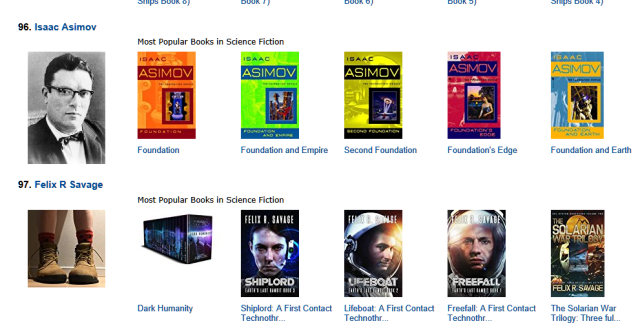
Ladies and Gentlemen, Boys and Girls, Children of All Ages,……
First, why don’t you tell us a little bit about yourself and your background?
Hello JR, it’s great to be here! I cannot reveal too much about myself as it might compromise my operational security. See here. However, my fiction is more of a reaction to my background than a reflection of it. Example, I majored in history and now I write about the future! Go figure.
What is something people would be surprised to know about you?
I enjoy roller-skating.
I’ll go out on a limb and assume that if you write books you also enjoy reading them. What other genres do you enjoy reading, and how have they affected your writing?
Everything I read feeds into my writing and I’m omnibibliovoracious. I made that word up just now. I read every genre under the sun with the exception of romance (sorry). In the last week I have read two thrillers (by Gregg Hurwitz and Cate Holahan), a new economics book (Tyler Cowen’s The Complacent Class), and a time travel sci-fi book (Extracted, which was a Kindle First selection and one of the only GOOD Kindle Firsts I’ve found yet).
Who are your biggest writing influences?
Other authors. I read something great and think “I want MORE of this,” but there isn’t more to be had, so I have to write it myself, and in the process it turns into something completely different. But still moreish, one hopes.
Who are your favorite authors and books?
How long can this blog post be? Kidding. Some of my all-time favorite authors are Iain M. Banks, Tolkien (of course), C.S. Lewis (of course), Peter F. Hamilton, Robert Harris, George Macdonald Fraser, Douglas Adams, Evelyn Waugh … Hmm there is a pattern here. All Brits and nearly all dead. Peter, stay healthy and keep writing!! Oh and my favorite NEW author is Gavin G. Smith (another Brit), whose space opera series you should go and pick up RIGHT NOW.
What is your preferred writing style?
All day every day. Sadly I have a 9 to 5 job so this is a dream rather than the reality at present.
How did that lead you deep into the weeds of the writing life?
You mean there’s any other way to live? *tries to see out of weeds* Nah. I’m happy right here!
When did you get serious about your writing?
At the age of 11.
What is your current novel? Tell us a little bit about the premise?
I just wrapped Shiplord, Book 3 in the Earth’s Last Gambit Quartet. This series starts out in the present day and involves a first contact scenario like nothing you’ve ever read before. I call it “techno-realistic science fiction.” Nearly all the technology in the series either really exists, or could be developed based on stuff we have. There are a few bits of armwavium here and there. See if you can spot them!
Shiplord is obviously a series, where can we expect it to go?
Book 4 will be entitled Killshot. It will involve a stupendously thrilling battle for the future of Earth!!!
Where did you find the inspiration for Shiplord?
As I mentioned above, I often get inspired by other authors. In this case it was John Sandford. He co-wrote a sci-fi book called Saturn Run. I really liked the concept, but I thought the execution left something to be desired, and the less said about the ending the better. So I decided to do the same sort of thing but do it right. You judge whether I succeeded or not!
Your characters from Shiplord are sent into a gladiatorial death match. Who wins?
My money’s on Jack. There is a reason his nickname is Killer, and it isn’t entirely ironic!
What do you listen to while you write? Or do you prefer silence?
Unfortunately I have no choice in the matter. I either write to a soundtrack of my co-workers nattering, or (on weekends) kiddie shows on the iPad or noisy children’s let’s-pretend games.
What is the most embarrassing thing you’ve looked up in the name of research – or what do you think the government has maybe flagged you for?
You’re trying to catch me out here, aren’t you? *adjusts tinfoil hat*
What was your favorite part of writing Shiplord?
I enjoy ALL of it except research. Thankfully I have help with that? Bill Patterson, my science consultant, is a paragon of patience and answers all my scientific questions without laughing in my face. You’re a rock star, Bill.
Which actor/actress would you like to see playing your main characters from Shiplord?
If I ever got a film deal, I wouldn’t mind if they were played by clay animation models.
Do you have a special time to write or how is your day structured?
Since I have a day job, every bit of free time is writing time.
Do you aim for a set number of words/pages per day?
As many as possible.
When you develop your characters, do you already have an idea of who they are before you write or do you let them develop as you go?
I start out with a clear idea of them which always turns out to be wrong.
How did writing your current novel differ from your writing your previous novels?
This one was tough. It is the story of a space voyage. The voyage takes two years. How do you write an interesting story about people cooped up aboard a spaceship for two years? It’s kind of like a country house mystery except the country house is a bunch of tin cans attached to a nuclear reactor.
If Shiplord had a theme song what would it be?
Something by the Red Army Choir.
Shiplord is full of many amazingly talented characters and I imagine it was really fun to create some of them, but which one was your favorite and why?
I try not to play favorites. It’s not fair to the others.
What advice do you have for writers who are just starting out?
Put your head down and write as much as you humanly can, because you will probably need to write a LOT before you start to get the hang of it. Improvement is a never-ending journey. And read a LOT, too. That is just as important as writing.
I hope you enjoy this little conversation, and if you want to find out more about Felix R. Savage then follow the rabbit trail to their warren in the internet! If they don’t like it, beat ‘em with a carrot and keep on truckin’! And watch out for those lizard people, I hear they bite!
Until next time, stay frosty and don’t forget to keep your powder dry!
JR
–> As usual, all images came from the Google’s “labeled for reuse” section or are screen shots taken by JR Handley and used under the Fair Use Doctrine.
–> Some of these interview questions were inspired by my good friend TeacherofYA, and are used with her permission. If you have kids who love to read, she’s the girl who’ll make the literary introductions! You should check her out, after a lifetime of reading, your kids will thank you.
 J.R. Handley's Blog