World Building: Website Design

matt-mws

Hey Space Cadets, how’s everyone today?  All’s going well in my neck of the of the woods.  Sorry this blog is going up late, had to deal with a slight family emergency.  Seems my erstwhile keeper locked her keys in her car on the way home from her sisters, several hours away.  Luckily the keys were in the car, one less expense!  As for The Sleeping Legion Series, I’m making adequate progress on book three.  Just shy of 40k words and with the wife home, and shedding the geographic single dadhood, I should be able to rock-n-roll.  Hopefully I can tame the Dragon, and make the dictation method work for me to speed up this spaceship!


Today I wanted to talk to you about the biggest part of my world building, the authors platform.  I’m not the most tech savvy guy out there, I’m practically a technological troglodyte.  When we decided to get a professional website, Team Handley picked what we could afford.  We were pre-revenue with the writing, but wanting to build everything up so we were prepared for launch day.  Ultimately, we went with WordPress because I already had a presence there and I didn’t want to lose that.  In the future, I’m not sure which hosting platform I would use but I love the friends I’ve made on WordPress so I think I’d keep that too, even if only the free part as a mirror to whatever follows.


After we set up our new website, we ran into struggle after struggle trying to figure it out.  When we realized that we would need help, we shopped around the best person for the job and found Matthew Wayne Selznick through my membership in The Listeners of the Dead Robot Society group on Facebook.  He first reached out with a few free tips, just one author helping another, until it became clear to me that he was the guy we would be hiring.  A few phone calls later, contracts were signed, initial deposits paid and our website was quickly assembled.  Seriously, in under two weeks we were ready to go.  Obviously making the site from scratch would take him longer but he was very forthright about everything.


If this strikes your fancy, if you’re interested in more, check out Matt’s websites!  Tomorrow’s post will be a follow on interview with Matt, so check back for more!


Until next time, stay frosty and don’t forget to keep your powder dry! 

brown_bess

JR


 –> As usual, all images came from the Google’s “labeled for reuse” section or used with the full permission of the owner, MWS Media. 


Marine Monday: Basil Terloar

sleepinglegion_logo_nov2016_02_blackbg

Hey Space Cadets, how are you this fine Monday?  Still feeling the effects of the New Years Hangover?  I’m sober, and even have some blood in my whiskey stream.  My wife is out of town, so I spent a quiet night writing after the kids went to bed.  The Legion Awakes and Fortress Beta City are continually surprising me and I have you guys to thank.


First, let me give you a little bit of backstory about Fortress Beta City and Operation Breakout.  Those two stories started as one novel, until Boss Man caught on that I was about to write a Tolkien worthy novel.  After we split the two, Fortress Beta City became the story of the Marines of the 6907th TAC RGT struggling to survive in a doomed city.  The next half of what I plotted became Operation Breakout, where two task forces must fight to secure the continent of Serendine from the New Order.


I felt like the build-up in the second book made a lot of promises for the third, so I want to deliver.  Operation Breakout will be as high octane as I can make it, and then my editor will help me add on some dynamite for that little bit of something extra.  As I developed these plots, one of my secondary characters, whose whole purpose was to show how the lost Kalino City was different from Beta City and Detroit City.  The Auxies were treated a bit better and the culture was different, which likely led to Kalino City being lost to the ravages of time.  One of those characters was Auxiliary Technician Basil Terloar.


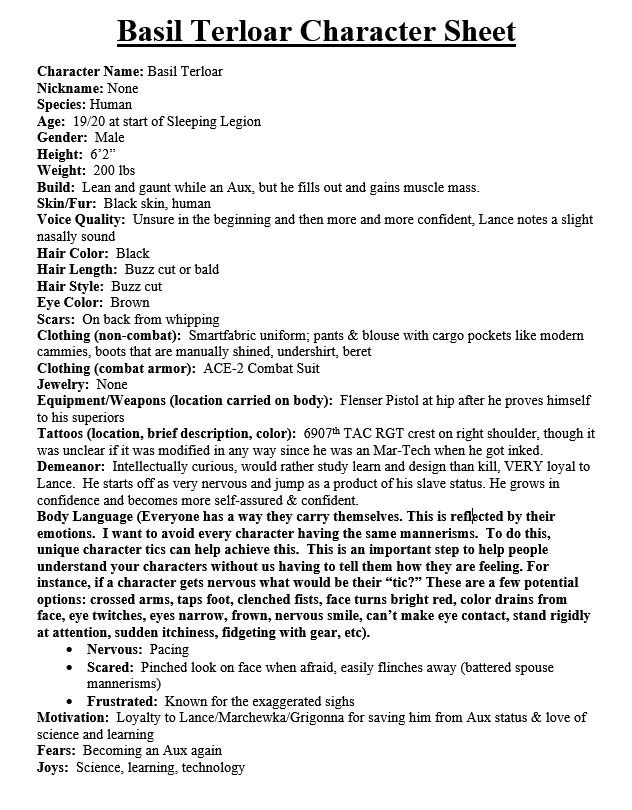
Basil was a cowering wreck, a pacifist in a world where the gun ruled.  He wasn’t like the other boys and girls, resulting in his being shipped off to the Aux Pens (slave pens) to be tasked with the manual labor needed to keep the cities alive.  That is, until that fateful day he met Veteran Sergeant Lance Scipio.  For a sneak peek into him, a look at how the sausage is made, here is his character sheet.


newsletter-banner


basil-terloarbasil-terloar-2


I hope you found this peek into my process enlightening, and the character compelling.  If you have any questions, don’t be afraid to ask!


Until next time, stay frosty and don’t forget to keep your powder dry!

brown_bess

JR


–> As usual, all images came from the Google’s “labeled for reuse” section.

Interviewed by Boss Man

sleepinglegion_logo_nov2016_02_transbg

Hey Space Cadets, I hope everyone is having a spectacular day!!  I’m doing great, I had a moment on release day where The Legion Awakes was #27 in the Hot New Releases for Military Science Fiction (Space Marine) and #44 in the broader Hot New Releases for Military Science Fiction.  Thank you, sincerely, for being a part of my team and joining me in the trenches!  To be honest, we don’t plan to be a flash in the pan.  The plan for The Sleeping Legion Series is one of a slow burn, as we build an awesome series.  We hope the readers agree, and join us on this adventure.


Moving right along to the topic at hand, today Boss Man posted an interview he conducted with me and I thought I would share the link.  If you want to learn more about the craziness behind my shenanigans, click here.


Until next time, stay frosty and don’t forget to keep your powder dry!

brown_bess 

JR


 –> As usual, all images came from the Google’s “labeled for reuse” section.

Marine Monday: Infopedia’s

sleepinglegion_logo_nov2016_02_darkbg

Hello Space Cadets, how are you today?  I’m doing outstanding, getting ready for the launch of my debut novel The Legion Awakes and hoping everyone loves it.  Paying back my mom for what we spent in the pre-publication stage wouldn’t hurt either!  To do that, people have to find me, so that lets me justify my time playing on my blog.  Shh, if anyone asks it’s for work (nods vigorously).


Today I wanted to talk to you about a feature of Tim’s website that has a metric frakk ton of information about his world building.  He labels these Infopedia’s, and they read like an encyclopedia entry.  They’re written in from the perspective of future historians studying the past, the eras we both write in.  It was a lot of fun to read when I was first introduced to his world as a reader.  I often refer to it as I write as well, and since I started this World Building Series Tim has been inspired to update this section on his own blog.


In addition, these posts serve as additional cannon support for the Universal Codex that my editor posted about over on his blog.  Sometimes they’re called other things as well; Universe Bible, World Building Style Guide or their brain dumps.  If you don’t follow him, and you love reading and writing, you should check him out.


I’m sorry this wasn’t a more exciting post, but I felt that I needed to point everyone in the right direction to see the building blocks of my works.  From here on out, I’ll be focusing on the things I added to the universe and will let Tim embellish his own idea babies.  Hopefully this helps, and wasn’t too disappointing.  As you know, I’ve been handling the pre-publication details of my first two novels.


infopediainfopedia-1infopedia-2

 Until next time, stay frosty and don’t forget to keep your powder dry!

brown_bess JR


 –> As usual, all images came from the Google’s “labeled for reuse” section or are owned by JR Handley.


The Legion Awakes

sleepinglegion_logo_nov2016_02_darkbg

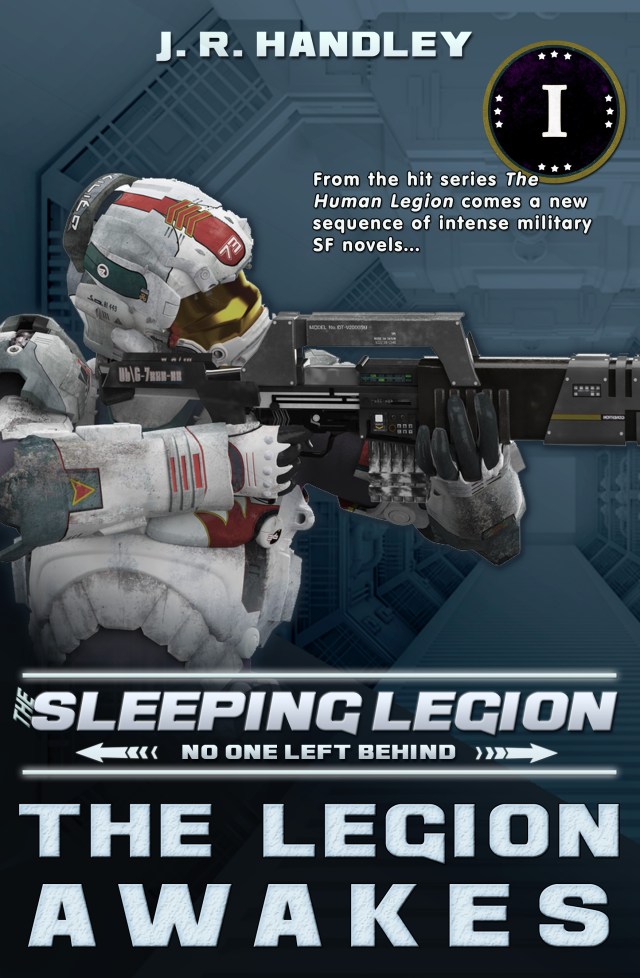
Hello Space Cadets, how are you today?  I’m doing outstanding, biting my nails as we launch my debut novel The Legion Awakes.  I’m anxiously waiting, hoping everyone loves it, because I’ve poured my soul into it.  Paying back my mom for what we spent in the pre-publication stage wouldn’t hurt either!  It’s officially out in the world, so mosey on over to the Amazon link and take a look! 


sleepinglegion_book1_08


Until next time, stay frosty and don’t forget to keep your powder dry! 

brown_bess

JR


 –> As usual, all images came from the Google’s “labeled for reuse” section or are owned by JR Handley.

A Moment of Silence

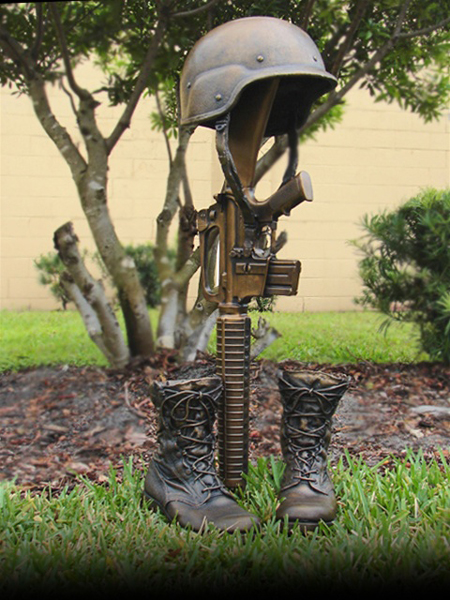
Hello Space Cadets, today I’m the bearer of bad news.  Today we mourn the loss of one of my closest friends and a staple of the first two Sleeping Legion novels.  Additionally, I had the unpleasant duty of killing off several Red Shirts and my heart breaks.  My spouse might call them imaginary, but I know they’re real.  She also likes to point out that it was I who killed them.  Yes, cold hearted bastard that I am, I killed them all.  Almost an entire regiment had to die today, so that Serendine might be free of the New Order heathens.  I know the truth, they were cold heartedly murdered by those Hardit scum.  In memoriam, I would like a moment of silence as we celebrate those poor young lives cut drastically short by the ravages of war. 


spu723-2-600


Thank you for your kind considerations.  Please make all bereavement donations to the Human Legion Widows and Orphans Fund.


Until next time, stay frosty and don’t forget to keep your powder dry!

brown_bess

JR


 –> As usual, all images came from the Google’s “labeled for reuse” section, are owned by JR Handley or are being used under the Fair Use Doctrine.  The image of the statue can be purchased at the Mainely Urns and Memorials website.  It’s called the Battle Field Cross Memorial Sculpture and no copyright infringement is intended.  We at Team Handley fully credit this company for their masterful artistry and value the intellectual property rights of our fellow artists.  Seriously, check out their stuff if you are ever unfortunate enough to need to commemorate fallen loved ones.

Prompting Creativity

sleepinglegion_logo_nov2016_02_blackbg

Hello Space Cadets, how is everyone today?  Just a quick update, I have finished my short story for the Roswell Anthology from Tickety Boo and will be sending it to my editor today!  Once I submit it, I’ll keep posting updates on the process.  If you like science fiction, why don’t you write something and submit it!  It was a lot of fun and sparked about two dozen or so novel ideas that I fully plan on exploring.  We would all love to hear about your process, your final project and whether or not it got picked up.


For today’s blog, I decided to share a fun little writing prompt I found.  This challenge came from high school, somehow, I never started it.  Shh, don’t tell my teachers.  I decided to give it a shot and set some ground rules for myself.  I needed it to be flash fiction, to practice my abilities at writing the shorter stuff as well.  I wanted to keep it around 125 words and I only had one extra word I couldn’t cut.  And I had to do it in under 5 minutes.  Here is the results of my efforts, feel free to point and laugh!  And if you’re feeling especially froggy, jump on in and write your own reply to this prompt!  Can’t wait to read it if you do!


Writing Prompt: What started a centuries-old blood feud?


The Banpiro Clan and the Lupo Clan attended their neighborhoods weekly shad planking, and were enjoying a hearty meal. The beer was flowing, wine was in every glass and the kids were joyfully playing in the adjacent meadow. When Lordette-Chief Banpiro and Lord-Chief Lupo got to the buffet line there was only one slice of pecan pie left. Deciding to strike a blow for equality, Lord-Chief Lupo ate the last slice of pie.

Undone by the lack of civility, Lordette-Chief Banpiro slapped the Lupo Clan Chief and challenged him to a dual. History never knew exactly who fought whom, but the feud that followed has lasted eons and stood the test of time, while the battle that followed has been lost among the ravages of time.


Until next time, stay frosty and don’t forget to keep your powder dry!

brown_bess

JR


 –> As usual, all images came from the Google’s “labeled for reuse” section.

World Building Wednesday: Sand Tables

tranquility_4

Hello Space Cadets, how is everyone doing today?  What’s that?  I can’t hear you, sound off like you got a pair!  And if you don’t, fake it till you make it!  So, now that I have your attention, let’s have a little chat over coffee!  Today I decided to give you get a sneak peek into how I wrote my battle scenes.  Let’s dive into the world of sand tables, sometimes called Recess for Soldiers!


So where to start, first let me start by discussing what a sand table is.  In a nutshell, a sand table is a surface bearing a three-dimensional map of a given piece of land.  According the Merriam-Webster, it’s “a table bearing a relief model of a terrain built to scale for study or demonstration especially of military tactics.”  Basically, I a super special map!  The military has used them since forever, long before Christ was even a Corporal.


Now that I’ve explained what a sand table is, I’ve decided to show you the one I made for my first novel.  Yes, The Legion Awakes, which will be published on December 19th, 2016.  It’s an improvised sand table for a combat scene in the novel involving a battle that my main character is involved in.  Wanna know more, read the book!  You’ve probably already read this, but please let me be prideful for just a few words!  I’m currently writing The Sleeping Legion Series set in the military science fiction world of Tim C. Taylor.  That book will be out soon, so I wanted to share some of how I got here.  Now that I’ve gotten that out of my system, let us return to our regularly scheduled programing.


Anyway, the key to a successful sand table is that they provide you with the opportunity to visualize the battle space in three-dimensions.  This allows you to better describe the field as you’ve envisioned it.  It allows you to envision all of the obstacles which might get in the way of the armies you are describing, though this could work for any type of writing, combat or otherwise.  I supposed I would be remiss if I didn’t also tell you that these can be used to model towns, and other generic settings for your works in progress.  Not as exciting, but certainly necessary.  They are used by the military for strategic visualizations, are extremely helpful with strategic planning, but can be used by everyone!!


Without further adieu, my masterpiece!


My Sand Table

This slideshow requires JavaScript.

LEGEND:

Cups: Akoni Mountains

Green Sponges: Dense forests

Brown Building Blocks: Old Government Tower and Akoni City

Blue Paper: Water Features; Dynia River and Lake Charon


Now that we’ve covered this in depth, feel free to sound off in the comments below!  And if this tickled your fancy, click the follow button and never miss out on the insanity or shenanigans from the Handley Trenches!


Until next time, stay frosty and don’t forget to keep your powder dry!

brown_bess

JR


 –> As usual, all images came from the Google’s “labeled for reuse” section or are owned by JR Handley.


Marine Monday: SA-71(h) Carbine

sleepinglegion_logo_nov2016_02_blackbg

Hello Space Cadets, it’s that time again!  Another entry in the Marine Monday Series where I introduce you to the world I get the privilege to write in.  Last time I gave you an overview of the term Marine, as it relates to the larger world, today we dive into the nitty-gritty.  This time I have even juicier information from my Legion Leaks informant, so pull up a chair!  The Sleeping Legion Series, which I kick into high gear with some badass gear, will carry on until I run out of stuff to say!  Since I’ve never been the quiet type, I doubt this will be an issue!  Eventually, after I’ve a few Sleeping Legion books under my belt, I’ll start adding some of my New Carthage Series world building.  Maybe shift the name a bit to ease confusion? 


Now let’s get to it!  The Human Legion Universe is a military science fiction world set in the distant future where humanity is enslaved to the White Knights, a race of aliens who rule through force and delegation.  We know little of this mysterious race of creatures, except that they value change and encourage mutation as a celebration of this change.  Basically, they’re Darwinism on crack.  When the Marines of the Human Legion abandoned the Tranquility System, my story takes off.  What happened to those left behind in the grueling war for freedom and independence?  Can the Marines left to fend for themselves survive on their own? 


A little about humanity, well at least those humans enslaved into service.  They’re the backbone of the Human Marine Corps and later the Human Legion Marine Corps.  In the absence of their Jotun officers, they must struggle to create a new Marine Corps, one capable of not just surviving but of thriving.  To do that, these Marines need weapons with which to wage this war.  The staple weapon of the Human Marine Corps (later Human Legion) is the SA-71(h) Assault Carbine.  For ease of use, I’ll simply refer to them as the Human Legion from here on out.


According to the official record, the SA-71 is designed to be the main assault weapon for space-borne humanoid troops. The (h) sub-variant has been adapted slightly to suit human physiology and responsibility level, but the ammunition and control systems are compatible with other weapons throughout the SA-70 range. 


The SA-71 is a versatile carbine, which has four features, and allows Marines to spread their lethal will across the galaxy.  My favorite part of the carbine is that it has an assault cutter for use in close quarters combat, which is a modern variant of the concept of a bayonet.  These cutters are a series of monofilament teeth which can be extended from the end of the gun barrel. They rotate at 1000 rpm for maximum penetration, eviscerating human and alien flesh.  Care should be taken if the cutters are employed in a lateral, raking motion as the blades may snap off.


Another feature of the carbine is the grenade launcher which sits under the main carbine barrel, and fires specialty munitions from the launch tube, providing each fire team with capabilities similar to that of mortar launchers of old.  While many Marine units were discontinuing the grenade launcher, replacing the capability by an improved supply of specialist munitions fired through the railgun, this changed when the Human Legion revived older tactics.  Instead, the Human Legion included both features and improved upon the existing grenades.


Some features of the carbine which are rarely used, due to their inefficiencies are the built-in beam weapon and x-ray weapon modes.  These features never really see the light of day in my series, or in Tim’s but maybe they’ll prove their worth in some unusual way in the future.  It’s a big, bad galaxy after all!


The best and most exciting feature of the SA-71 Assault Carbine is the railgun, the main functional mode of this powerful carbine.  Like all railguns, it operates by using electrical charges applied to superconductor rails that run along the gun barrel.  The rails are arranged in a helical pattern to impart spin to the round as it leaves the muzzle, improving accuracy.  The ammunition management system supplies the selected round and fits it to a sabot created on the fly through its sabot resin reservoir.  The sabot ensures optimum super-conductance and mechanically fits to the rails.  Sabots also permit the standard kinetic round to be much smaller than the railgun caliber thus allowing ammunition cartridges to hold many more rounds.  On full power, the railgun generates enormous heat and imparts a heavy recoil force at the breech of the weapon.  If the recoil dampening system is not overcome by sustained fully automatic fire, this energy is automatically absorbed at up to 80% efficiency, used to heat the reservoir of sabot resin, and recharge the weapon’s power pack.  In limited-gravity environments the motors in an ACE-series battlesuit can cancel most of the remaining recoil automatically.


Later, if I can sneak it past security I’ll post a more comprehensive list of weapons available to the Human Legion.  Gotta be careful, or I’ll end up as Snowden’s roomie in Siberia!


Until next time, stay frosty and don’t forget to keep your powder dry!

brown_bess

JR

 –> As usual, all images came from the Google’s “labeled for reuse” section or are owned by JR Handley.  Any re-use of Legion imagery should be approved by JR Handley or Tim C. Taylor.

Meet the Boss Man!

new_hl_weblogo_blackbg

INTRODUCTION TO THE HUMAN LEGION CREATOR:


Hello Space Cadets, I wanted to offer you a treat in honor of the recently passed holidays.  I’ve managed to snag an interview with the creator of the Human Legion Universe, Tim C. Taylor.  Other than being an amazing author, he’s also the man who’s giving me my first literary break!


Long before I was writing a spin-off series in his world, I was a fan of Tim’s science fiction masterpieces.  I stumbled into his universe after I had just been introduced to the Kindle by my neurologist, who was trying to get me to read again.  Because of my Traumatic Brain Injury, or TBI, I must exercise my grey matter or I’m at a heightened risk for dementia and other related issues.


I’d stopped reading because printed books gave me migraines after suffering my TBI.  Yes, even large print books.  My care-team struggled to find a solution; my doctor, my mom and my wife didn’t give up though.  Then my mom remembered that you could magnify the heck out of the print with the new Kindles.  I gave it a try, then I was off to the races reading again.  I’ll always remember 2014 fondly because of this rediscovery of my love for the written word.


I started with every free book I could find and then narrowed in on several genres.  It kept me occupied while languishing in the Veteran Affairs medical waiting rooms—where I spend too much of my life.  Books let me escape the depressing hospitals, and charge into other worlds.  After a ‘writing as therapy’ class, I gravitated towards science fiction and read everything I could afford.  I read so much that my family gave me Amazon gift cards that Christmas!!


Eager to spend my newfound digital currency, I went looking at the Hot New Releases in the science fiction, and found Marine Cadet by Tim C. Taylor.  I enjoyed it so much I became a dedicated fanboy, annoying my family with unsolicited book recommendations and looking for swag in his universe. [NOTE TO TIM: Still no swag in your world 😉]  To shut me up, my wife “jokingly” told me to find a support group.  I found Tim’s website instead.


With Tim’s website bookmarked, I took to the discussion boards. I spent hours there talking about his books and science fiction in general.  After some back and forth with Tim, Hans and I ended up making a Human Legion Wiki.  Hans is a prince among men and helped handle the technical end of the Wiki until his health failed and taught me a lot about science along the way.  The Wiki’s not the prettiest, or even current anymore now that book four and five are out, but it was a labor of love for two of Tim’s loyal fans.


As part of these discussions, we sent Tim suggestions for spin-off stories he might pursue and offered suggestions of where we thought the world could go.  Right around this time, I took the VA’s writing therapy class and decided to write my own book.  I knew Tim had a publishing house, so I wrote the first chapter and sent it to Tim seeking advice.  He was very encouraging, but told me Greyhart Press was shutting down so he could focus on his writing.


I didn’t give up, and I improved the first chapter.  I submitted it, officially, as a work for him to consider publishing under his new Human Legion Publications company.  Obviously, he liked it, because he counter-proposed that I write the spin-off series I’d suggested HE write! He told me I would have to write a synopsis and a chapter to show where I was going, but that he was prepared to be convinced.  After reading my proposal, we signed a contract.  The rest is history.


As a side note, to those of you who don’t know, the Brits still wear wigs when in court.  To honor my Boss Man, I wore one when I signed on the dotted line!  Now, this contract is close to fruition and books one and two of The Sleeping Legion are due out in a few weeks.  To help show the people reading this blog what the universe is like, I’ve decided to interview the big boss man himself!


humanlegion_website_logo


Interview:


1)      Where did the spark that lit the Human Legion flame come from? What was the inspiration for this universe?

The spark was Doctor Who; the fuel was beer, though probably not in the way you might expect. This was way back in 2002. Doctor Who was off the air, but the BBC were releasing the ongoing adventures of Paul McGann’s Eighth Doctor in the form of novels, releasing 73 books in total. There are some things in print that are difficult to do well on screen and I was hooked on the detail and the development of the characters in the book series.


At that time, I’d written software, music, RPG adventures, but writing stories had never occurred to me. One thing I did make was beer. October through March every year was brewing season and I would mash my own grains and produce ales to my own recipes. A big part of why I brewed (other than to sample the delights of the finished product) was to broaden my appreciation of ales by having a go at making my own.


The thought popped into my head that if I’d gotten so much satisfaction from making my own beer, I could deepen my love of science fiction literature in the same way by writing some stories. So I set about sketching a future history starting with first contact with aliens and leading up to the war you see in the Human Legion books. I spent about an hour sketching out these ideas. Fifteen years later, I’m still writing the books that are falling out of this plan.


2)      Tell us more about what led you to write Science Fiction. Do you have a background in technology?

I write science fiction for the same reason I read it: other forms of literature feel so dull in comparison. Actually, I also read and have written alternate history, historical fiction, and fantasy because all of them can deliver the sense of wonder at experiencing a world that is different from the world I see around me.

When I was at school I was mad keen on astrophysics and quantum mechanics and the like, far ahead of what I’ve ever been taught. I never took it any further, deciding to double major in computer science and business studies at university before a career in the software industry. So I guess that other than software matters, my interest in science technology is pure hobbyist.


3)      Can you give us some more insight into the origins of your characters? Are they based on people you know?

Only loosely. Marine Cadet, the first Human Legion novel, was actually my sixth novel, and I think I ran out of real people to base my characters on in the earlier books. That said, you can’t help but base characters on your real experiences, and so there are hints of real people hidden in there. I would say in the Human Legion books that Springer and Indiya are the most like me, and Brandt is an amalgam of various people I’ve worked with in my previous career.

The character of Arun McEwan went through more name changes than any other. He was called Ernst in an early version, and Brand and a host of other names. I used to work with a guy called Arun and things took off when I borrowed his name.

In general, rather than start with a real-world person and mold them into a character, I start with a character and accrete little details based on real people. I ask myself who has the most interesting story to tell and what is the most interesting perspective to tell it from. That’s the core I base my characters on.


4)      When you started this journey, did you imagine evolving into the wider universe it has become with spinoff series by other authors and follow-on novels by you?

I didn’t expect to involve other authors at all, that’s for sure! But I had always expected follow-on novels and short stories, and inviting other authors to contribute is an awesome way to expand the universe. It’s fascinating to see other creators at play in my universe. The Human Legion is the fourth series of novels in this universe so far, and I have published seven short stories as well. I love to read a richly detailed universe, and I guess that shows in my writing because I’m trying to do the same thing.


5)      What made you decide to skip FTL and artificial gravity in your world? With your science in general, how did you decide what tech to use and which to exclude?

When I sketched out ideas for the universe back in 2002, I challenged myself: what is different about the setting to my stories? Much of the answer has still to play out in my published work, but centers on answering the question of why we on Earth have not previously seen evidence of alien civilizations and why aliens would be interested in visiting Earth. The lack of FTL travel was part of that initial sketch too, and both questions fed off each other. If it takes huge amount of effort and time to go from one star system to another, how does trade happen? How do you project force over that kind of distance? Why would anyone bother to invade Earth when it’s so impossibly distant? These questions have answers.

The lack of artificial gravity came later, but as part of a theme of trying to inject a little realism into interstellar travel and a sense of the practical difficulties it would entail. I didn’t want the Star Trek feel where people walk around ships as if on luxury liners. Not for this series. I’ve written about artificial gravity before, and it’s a common trope that became commonplace in order to make it easier to film science fiction. I don’t see the need for authors to use artificial gravity, and doing away with it adds a little distinctiveness since my characters have a different experience of getting around starships.

6)      What is your writing process?  Do you plot it out or fly by the seat of your pants?

I outline my books in advance. I know roughly what happens in the plot and how the characters will develop. Very early on I will write key scenes and snatches of dialogue. Once underway writing a new book, I will start at the beginning and write to the end. I know in a lot of detail what I want to do in the next few chapters, but keep the rest of the book more loosely outlined so I can change the plan easily as I discover more about the characters, and as plot twists occur to me. By the time I’m halfway through, I’ve thought ahead about so many opportunities to develop plot and characters that the rest of the book is mostly sketched out.


7)      Have you ever participated in NaNoWriMo? Either way, what are your thoughts on it?  I ask this because we’re in the midst of NaNo Season!

I’ve never done NaNoWriMo because it’s never fit well my schedule. One year I will! The idea of writing fast without stopping to edit is a good one and similar to what I do anyway.


8)      Now that you’re about to wrap up the Human Legion Saga, please tell us more about the new series.  From the covers posted on your website it looks intriguing.

Revenge Squad is told from the perspective of NJ McCall, a former soldier of the Human Legion who was retired to the liberated frontier world of Klin-Tula and told he is now a colonist. That doesn’t work out too well for him and he falls in with an outfit called Revenge Squad. In the lawless areas of the planet, some semblance of peace is kept because if you mess with one of Revenge Squad’s policyholders, someone like NJ McCall will show up in your face and deliver some serious retribution.


I only started reading the author, Jim Butcher, about a year ago and was immediately hooked on the Dresden Files series. I thought I’d love to write a character like Harry Dresden. So I did. Revenge Squad and NJ McCall is the direct result.

There are differences from the Dresden Files to be sure, not least that NJ McCall accepts he need to buddy up and to be part of a team, unlike Dresden. Also, the Chicago PI Jim Butcher writes about doesn’t have the digital ghosts of his dead friends constantly in his head. But there’s a similar sense of a wisecracking main character always moving forward who daren’t stop and daren’t look behind, because if he does, all the darkness in his past would catch up and destroy him. I have a lot of fun writing NJ McCall, and for an author that’s a good sign.

I sprinkle the books with some dark humor, which is just as well because the world of Klin-Tula is a seriously troubled place, forever lurching from crisis to crisis. The people of the Human Legion have no experience of running their own affairs during peacetime. They don’t even have experience of soldiers being allowed to grow old. Klin-Tula has three million settlers from five major races and they have to figure all this out for themselves. Like I said, it’s not going well, and that leaves plenty of opportunities for Revenge Squad Inc. unfortunately it also leaves opportunities for far worse people.


Compared with the Human Legion books, Revenge Squad will be more self-contained ‘adventure of the week’ books, but there’s a lot of character development planned in, and as the series builds we learn more about the dark secrets behind Revenge Squad until finally… Well, let’s just say there are some world changing turnarounds on the way, but you’ll have to read a few books before you get to that point. Actually, come to think of it, I need to write them first too.


9)      Where do you plan on the universe going next? Will NJ McCall be it, or are there more series to be written?

I have a lot of ideas, but to be honest because I need to put food on the table, I have to gauge the financial success of the new Revenge Squad and The Sleeping Legion series first. There is a season 2 I’ve planned for Revenge Squad, and NJ McCall is definitely in that. I have a series that comes after the Human Legion and features several main characters from that series supporting new ones. I’ve already written Arun McEwan’s final scene! I’ve also just written a scene for the series set in the 2060s on Earth, and a decade ago I wrote two novels for a series set in a parallel dimension where we meet another set of descendants of the children given up to aliens in the 2080s. At one level, that last series is a science-fantasy rerun of the First World War (and there’s a good story reason why that is so). I always assumed I would release that a century after August 1914. The books were ready in 2014, but I was writing the Human Legion instead.


So, I have plenty of ideas about what might come next. And that’s only in the Human Legion universe.


10)  What authors would you consider your inspiration?  Also, who would you be most honored to be compared too?

Robert Heinlein, Alfred Bester, Andre Norton, Anne McCaffrey, Isaac Asimov, David Brin. That’s a starter for ten, but I also have to acknowledge the huge excitement I also had from reading 2000 A.D. back in the 70s and 80s (Pat Mills, John Wagner, Gerry Finley-Day), and also the fine writers and rules designers for RPGs, notably Tunnels & Trolls, Dungeons & Dragons, and Traveler.

I would most like to be compared with Peter F Hamilton, because he is the only science fiction author my wife enjoys reading. Plus, when he was guest of honor at DragonCon last year, he got to sit in the back of a car in the parade and wave at the good people of Atlanta. Like the Queen. To be honest, I’m not a massive fan of the royals, but I have to admit they are very good at waving to crowds, and I think that would be a cool thing to do professionally.


11)  In closing, what advice would you give to new authors and writers in general?

There’s a huge amount of good advice for writers already out there (amid the dross), so I will limit myself to a specific group of authors: those who wish to earn a living from writing novels, and for whom at least part of their strategy involves self-publishing.

Firstly, it’s important to cultivate the ability to switch in and out of an artistic/creator mentality, and a commercial one. I’ve known people facilitate this by working in different locations and wearing different clothes to help their minds to fit in the right persona. I don’t do that myself, but I try to separate out commercial and artistic work times, and when I’m thinking commercially I will deliberately use language such as ‘product line’ rather than ‘book series’.

It’s okay to spend time in a commercial mindset. It doesn’t invalidate your artistic side, nor does it mean you cannot go back to your artistic self what you’ve done with your business self for now.

Writing novels is extremely time-consuming. Marketing and promotion are also time-consuming. Of all the things you could do as a writer, you only get the time to do a tiny fraction of them. Being able to think from a distanced, commercial perspective can help enormously to steer you to do the things that will be most value to you.

For example, many successful self-published authors will talk of the idea of a Venn diagram of possible book projects. Which sub-genres and styles are popular? Which are you most able to sell? Which would you most enjoy writing? Which are you most skilled at writing? Look for the areas were all four sets intersect and pick your next book project from one of those points of intersection.

There are now many successful self-published authors in science fiction and beyond, and many share freely of the experiences in interviews, and in particular with podcasts. If you listen or read these interviews wearing your commercial head, you will see that certain patterns of behavior are very commonplace. For instance, successful self-publishers will acknowledge the role luck plays in their success, but they also did their best to engineer their own luck. I think it was Nick Webb who said in a podcast that success in publishing science fiction is like winning a lottery ticket. Well, he didn’t like those odds, so he bought thousands of lottery tickets.

My second piece of advice sounds obvious, but often gets forgotten amid all the detail about marketing and so forth. There’s a huge amount of competition in hot publishing areas such as science fiction right now. When I say a huge amount, I mean there’s never been anything like it in the history of publishing. The inevitable result is that readers are becoming more and more discerning. You have to write great books! And it doesn’t matter whether a reviewer in a magazine or newspaper thinks your books are good, or whether an award jury likes you, it’s the readers that matter. If you haven’t yet attracted a large enough fanbase to sustain you commercially to write whatever you want, look for the authors who consistently have bestsellers on Amazon and figure out why they are so popular by reading them. Then channel some of that into your own books while adding your own distinctive twist. If you read the bestsellers and scratch your head because you can’t understand why so many readers would buy these books, then you’re probably trying to write a book for the wrong audience.

Probably.

But maybe not!

Because the final word of advice is that publishing is a chaotic, messy, and changing business, and there are always a handful of people who break all the ‘rules’ and succeed anyway. That could be you. But to use that metaphor from earlier, if you disregard the advice from successful authors you still get to buy your lottery ticket, but in your case you only get the one set of numbers.


This slideshow requires JavaScript.


 If this convinced you to find out more, look Tim up here:

Amazon, website, Facebook


I hope you all had a great time getting to know Tim!  Don’t be afraid to say hello here or on his own website.  He’s always quick to respond when he’s not grinding away on his books and dealing with my craziness.


Until next time, stay frosty and don’t forget to keep your powder dry! brown_bess

JR

 –> As usual, all images came from the Google’s “labeled for reuse” section or are cover art owned by Human Legion Publications under licensed use for JR Handley.